Working Your Way Out of the Grey
In short: In January the sun shines almost six hours a day on average in Málaga and under two in Berlin (1991 to 2020 climate normals from AEMET and the German Weather Service). If you want to escape the grey winter, Job & Stay lists jobs with accommodation on the Costa del Sol, the Canary Islands, in Greece, the Alps and Lapland, free of charge, with applications going directly to the employer.
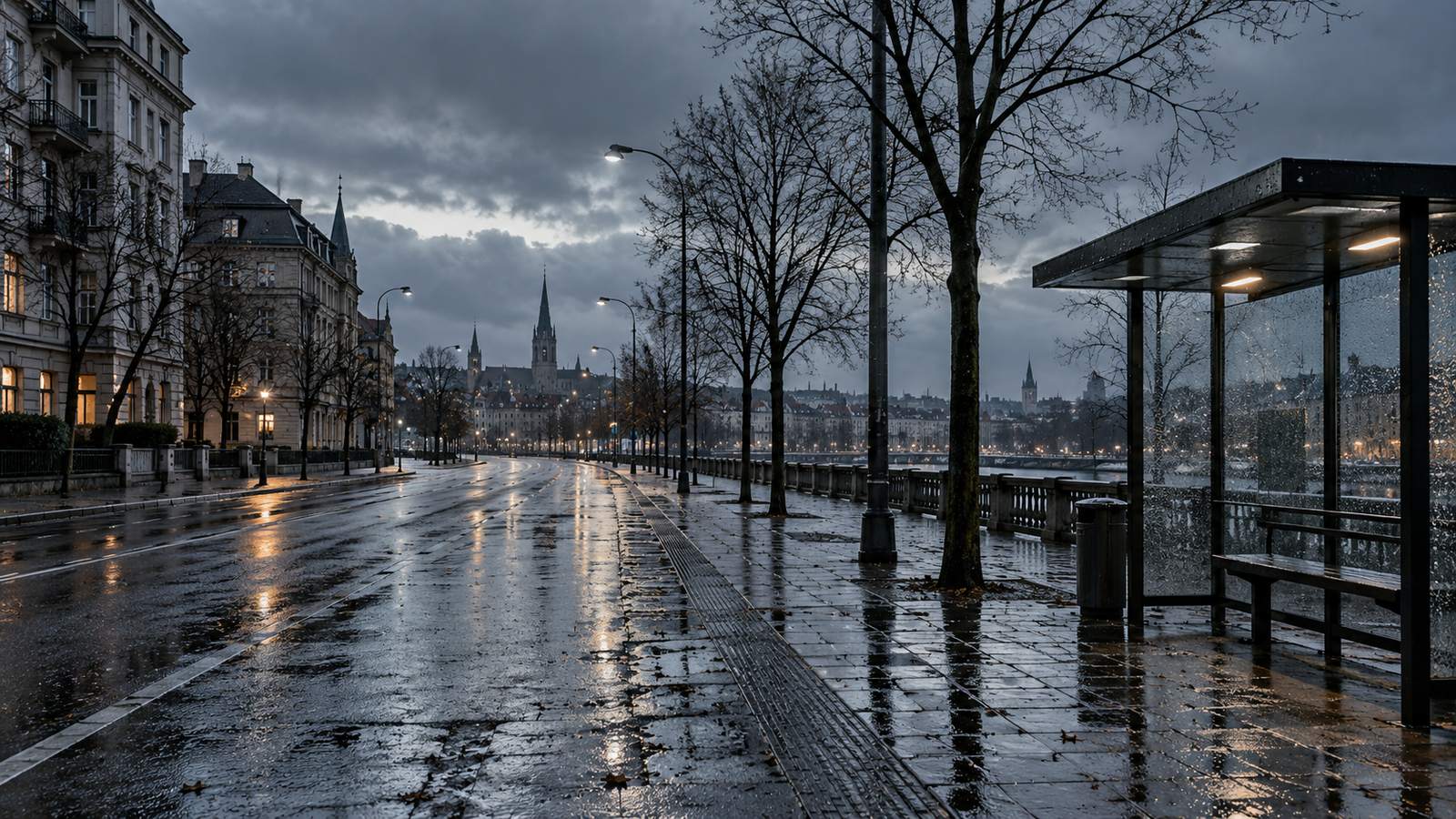
Just after eight, and it hasn’t got light outside, only less dark. The sky hangs over the back yard like wet wrapping paper. For eleven days I haven’t seen a shadow, not even my own.
I used to go to work and never noticed the winter. Now it sits with me at the kitchen table. The lamp hums all day, even at noon. At some point my shoulders crept up, and they won’t come back down.
An imagined voice. Many people who spend the winter without work tell it much like this.From November to March a lid sits over large parts of Germany. It doesn’t even rain properly. It is just grey, for five months, and if you have no fixed daily routine you feel every hour of it.
Anyone applying for a transition job asks two questions: What do I earn? Where do I live? The second one has weather. Nobody notices in August. In January it counts for more than you would think.
January in numbers
We looked up what the weather services measure for January. These are averages over thirty years, so not a forecast, but an honest picture of what awaits you.
Hours of sunshine in January
hours over the whole monthMean daily temperature in January
degrees CelsiusBreak it down to a single day. In Málaga the sun shines almost six hours a day in January, on average. In Berlin it is under two, in Hamburg just under one and a half. That is the difference between a day when you step out on the balcony at noon and one when the light never goes off.
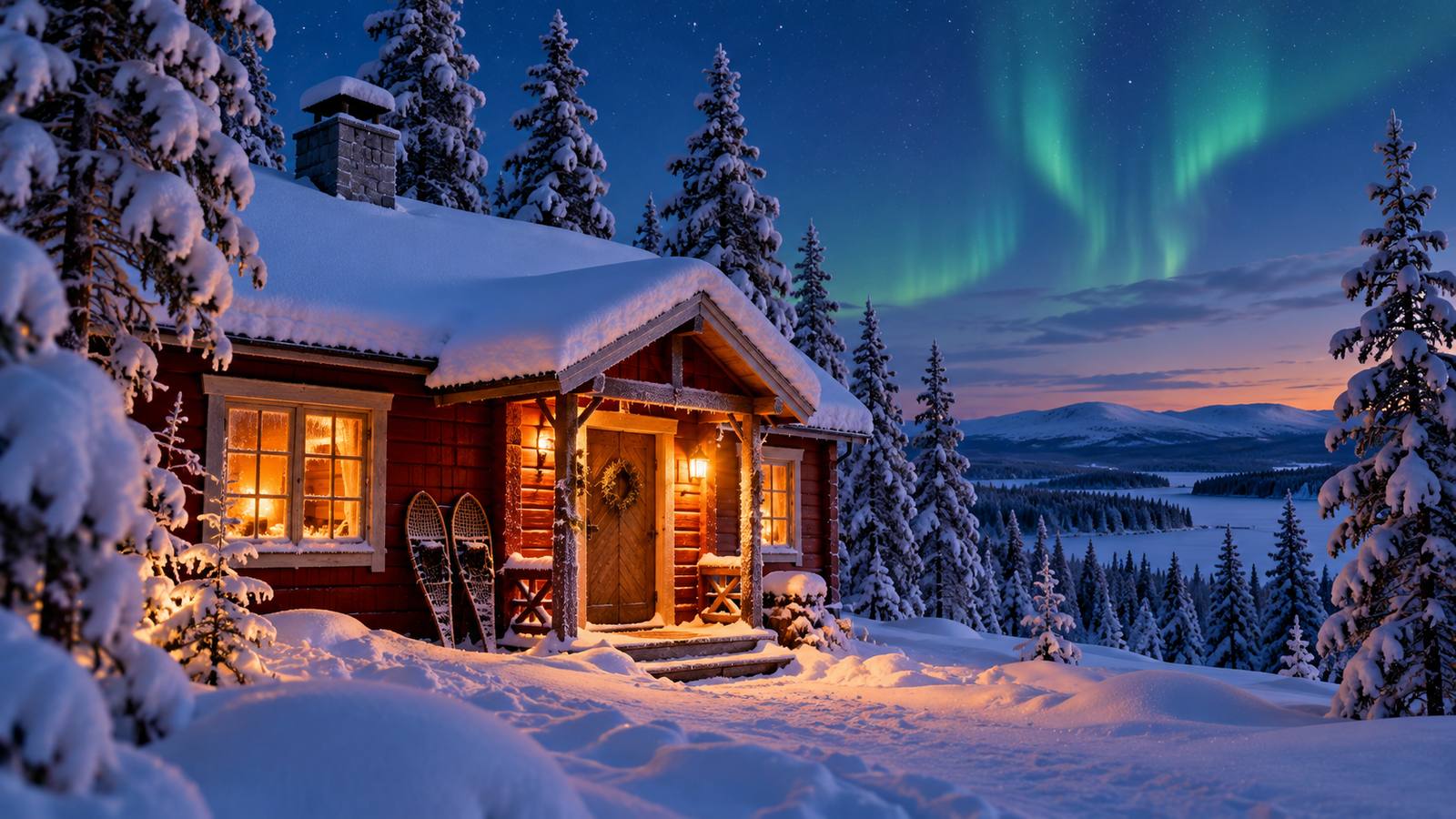
Rovaniemi is the odd one out. In Lapland there is even less sun in January than in Berlin, and around New Year it barely clears the horizon. Anyone who goes there is not chasing sunlight. They want snow and silence. Sometimes, when the clouds stay away, green light moves across the night sky.
Sources: climate normals of the national weather services. Berlin and Hamburg: Deutscher Wetterdienst (DWD), 1991 to 2020. Málaga: AEMET, 1991 to 2020. Tenerife (Santa Cruz): AEMET, 1981 to 2010. Crete (Heraklion airport): Hellenic National Meteorological Service, 1991 to 2020. Innsbruck (university): ZAMG, 1981 to 2010. Rovaniemi (airport): Finnish Meteorological Institute, 1991 to 2020. Compiled from the climate tables of the cities on Wikipedia, retrieved on 24 October 2026. The values apply to the named weather station, not to every place in the region.
What light does to you
Your body notices light even when you don’t think about it. The skin makes vitamin D with the help of sunlight, and in Germany the sun is too weak for that from October to March. So say the German Nutrition Society, the Federal Institute for Risk Assessment and the Max Rubner Institute. In winter the body then lives on what it stored in summer.
For mood there is no formula. An English study of almost 20,000 people (White and colleagues, Scientific Reports, 2019) found that people who spend at least two hours a week in nature report good health and wellbeing more often. That shows a link, nothing more. A walk by the sea cures nothing. Many people still say it was the first time in months they were glad to step outside.
And then there is what no study measures. You open the door in the morning, and the lemons are still hanging on the trees.
This is not medical advice. If dark thoughts hold on to you for long, talk to a doctor.
Four kinds of winter you can choose from
You will not want to work everywhere it is warm, and it is not mild everywhere it is bright. These four landscapes show up most often among our jobs.
- The coast
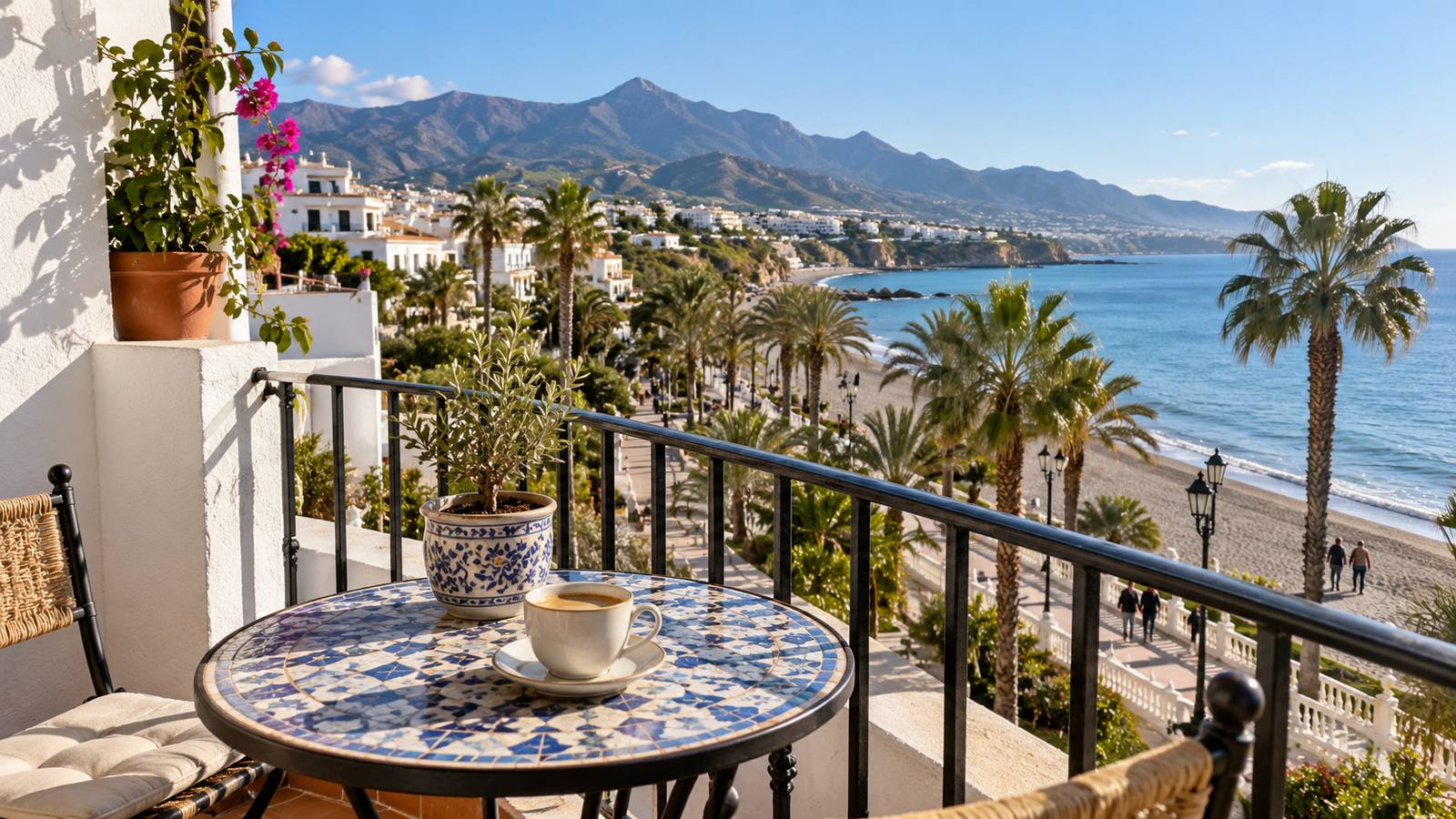
On the Costa del Sol January averages a good twelve degrees, and the terraces are full all the same. You wear a sweater, not a down jacket. Many hotels in Marbella run through the winter, so the jobs don’t end in October.
- The islands
On Tenerife the thermometer averages a good eighteen degrees in January, on Crete a good twelve. On Fuerteventura the wind blows almost all the time. In summer it cools you, in winter it can wear on you, and you notice by the third day.
- The mountains
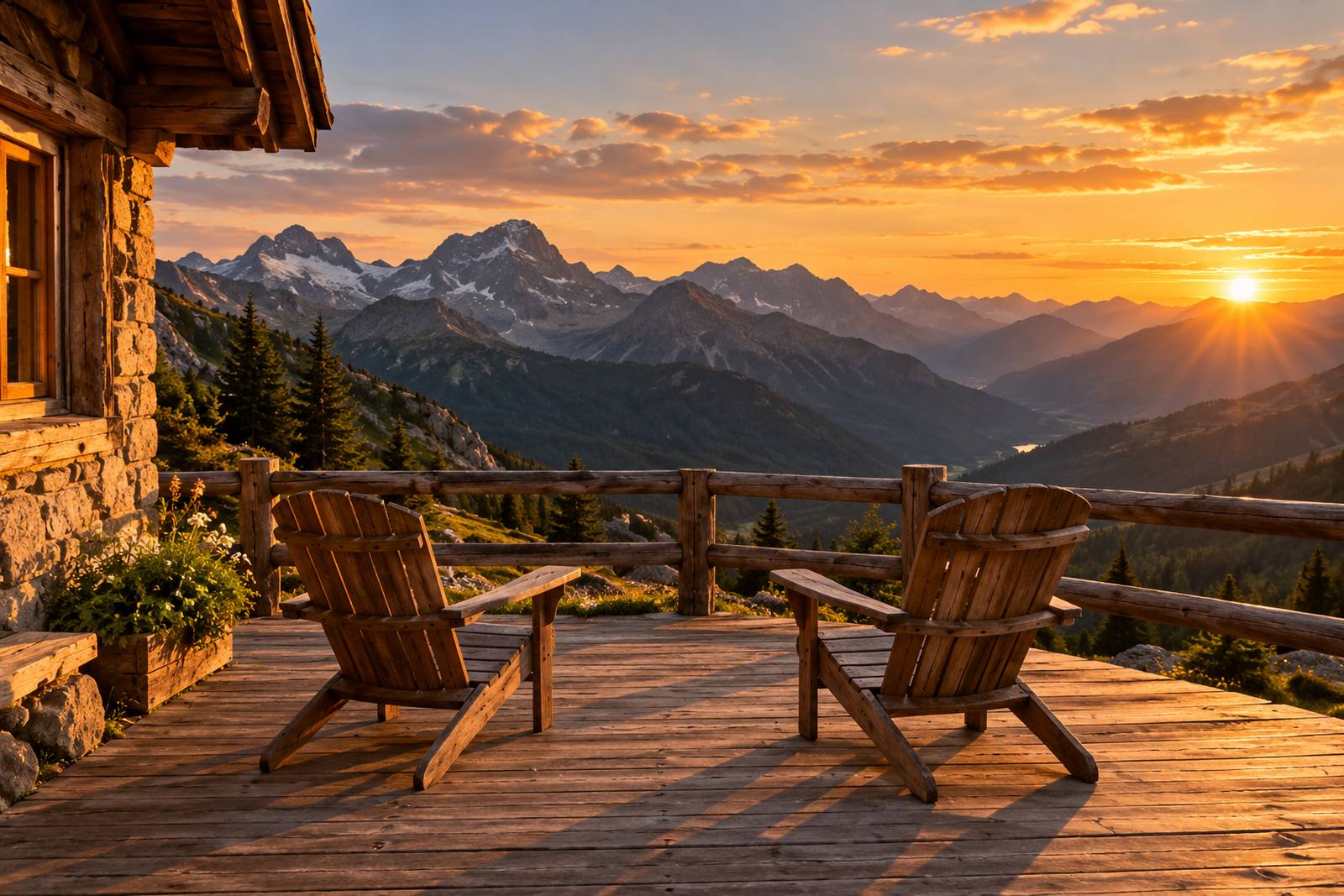
Innsbruck gets around a hundred hours of sun in January, nearly twice as many as Berlin, and that with frost. The snow squeaks, the air tastes of nothing, it is so clear. In the evening you sit in the warm staff room, hands around a cup.
- The north
In Lapland there is hardly any sun in January, but there is snow that throws back every bit of light, and a quiet you don’t know in the south. If you don’t fear the dark, you find something there that exists nowhere else.
Not every climate suits everyone
What can get hard
- Heat in summer. A kitchen or a front desk at 35 degrees is work, even with the sea outside the door.
- Spanish houses are often cool and damp in January. Heating as we know it does not exist everywhere.
- Darkness in the far north. If you can hardly get out of bed in Hamburg in winter, you won’t suddenly be livelier in Lapland.
What helps
- Ask about the room before you say yes: which direction does it face, is there heating or air conditioning, how loud is the neighbourhood?
- Think back to earlier winters and summers. When did you feel well, when badly? That is the best forecast you have.
- For your first job choose a season of a few months. Then you see how the climate suits you and don’t have to commit to a year at once.
Your climate check before you apply
- LightHow many hours of sun do you need to feel well? Look at the bars above and work it out per day.
- WarmthDo you like it mild, hot, or cold and clear? The mean daily temperature says more than any brochure.
- Wind and airOn islands and coasts it is often windy. Many people love that, and some find it tiring.
- RoomWindows facing south or north, heating, air conditioning, shade: ask about it before you say yes.
A day that is not only waiting
A winter in the sun solves nothing that was unsolved before. The bills find you there too. But your day begins differently. You open the door and don’t first have to work against the sky. When you don’t know where to put yourself right now, that is no small thing.
Start with the two questions that always count: What do I earn? Where do I live? The jobs below show you both. The weather to go with it, you choose yourself.
Today on Job & Stay
- 445
- current jobs with accommodation
- 19
- countries
- 19 %
- of the jobs with free accommodation
Jobs with sun, sea and clear air
Six current jobs, on the coast, on the islands, in the mountains and in the north.
Images without a source credit are partly AI-generated illustrations.
 Fiperly
 Mutify
 KIPODE
 Birthday Paper
 Mia Amare
 HealthMetricsLab